• Free shipping on orders over €200 in most of Europe. See the 'Terms and Conditions' section for more details. •


Have you ever tasted a freshly opened extra virgin olive oil and felt a sharp tingling in your throat—almost like a jolt—or a lingering bitterness on your palate?
For many people, the instinctive reaction is doubt: “Has it gone bad? Is it too strong—maybe it’s acidic?”
Today, we want to debunk a myth that often unfairly penalizes products of the highest quality. Bitterness and pungency are not defects. Quite the opposite: they are the hallmark of a vibrant, rich oil—deeply rooted in Puglian tradition. In our mill, where we work with the Coratina monocultivar with an obsession for excellence, we know one thing for sure: an oil that “says nothing” is an oil that has lost its soul.
Make yourself comfortable—we’re about to explore what truly makes an olive oil “good,” and what to avoid.
Imagine biting into a raw artichoke, a fresh almond, or a wild rocket leaf. That vegetal bitterness is pleasant, fresh, alive.
In extra virgin olive oil, bitterness and pungency come from polyphenols—precious antioxidant compounds that protect the oil from oxidation and our bodies from cellular aging.
Our beloved Coratina, the queen of Puglian olives, is naturally extremely rich in polyphenols (up to three times more than other varieties). That’s why our oil:
If your Muraglia oil makes you cough slightly when tasted on its own, don’t worry—it’s greeting you. It’s telling you it’s fresh, healthy, and authentic.
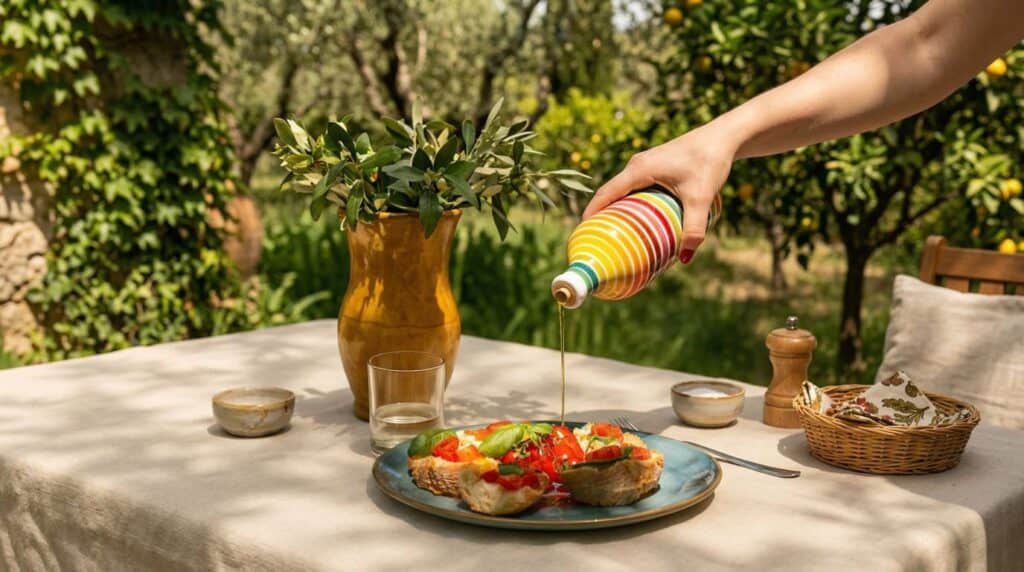
If bitterness and pungency are virtues, what should actually raise concern?
A defective oil is one that has undergone chemical degradation—often due to poor-quality olives or improper storage.
Here are the three main “villains” to watch out for:
This is the most common defect and the worst enemy of extra virgin olive oil. It occurs when oil is exposed to too much air or light.
These flaws arise even before pressing, when olives are piled up for days and begin to ferment.
This happens when oil is left unfiltered and residues of pulp and pit settle at the bottom, eventually decomposing.
We’re used to flat, standardized flavors shaped by the food industry. That’s why the first taste of a true Puglian extra virgin olive oil can feel surprising.
But try this:
Take a slice of warm bread, drizzle it with our Intense Fruity oil, and close your eyes. You’ll notice hints of dill, hay, and pepper. That intensity doesn’t overpower your dishes—it enhances them.
Olive oil is not just a fat to keep food from sticking to the pan.
It’s an ingredient.
It’s liquid culture.
Have you purchased a Muraglia ceramic jar or one of our designer bottles? Perfect. Now it’s up to you to preserve that excellence down to the last drop.
Here are three golden rules to keep your oil from turning rancid:
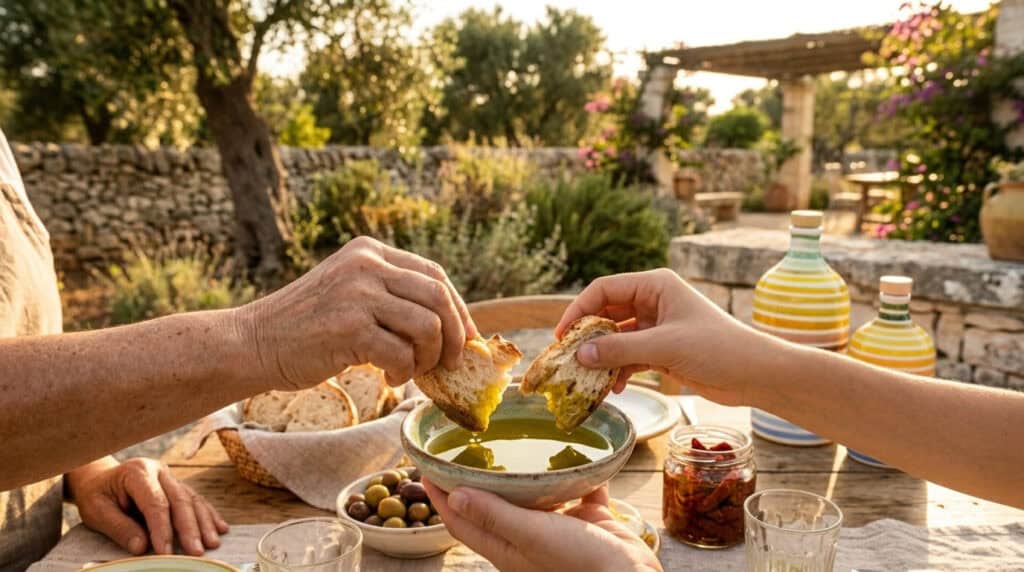
Choosing quality is an act of awareness. Now that you can distinguish between a virtue and a flaw, you’re ready to experience true excellence—with new eyes and a more discerning palate.