• Free shipping on orders over €200 in most of Europe. See the 'Terms and Conditions' section for more details. •


Imagine you’ve just cooked a beautifully fresh fish—perhaps a sea bream baked with a few simple herbs. It’s a delicate dish, evoking the sea and a sense of lightness. Now imagine drizzling over it an olive oil that, instead of enhancing it, overwhelms it with strong bitterness and aggressive spice. The result? The fish disappears. The magic is lost.
In Puglia, our homeland, we know that extra virgin olive oil isn’t just a condiment—it’s a true ingredient. It’s the voice that can make a dish sing or silence it. People often ask us, “What’s the best extra virgin olive oil?” Our answer, passed down over five generations, is always the same: it depends on the story you want to tell at the table.
Today, we’ll guide you on a sensory journey through our cultivars—Coratina and Peranzana—to help you create perfect harmony in your dishes. Because true quality also comes from awareness.
For years, many of us have kept a single bottle of olive oil in the pantry, using it for everything—from frying to salads to grilled meat. But just as you wouldn’t pair a full-bodied red wine with a seafood salad, extra virgin olive oil also requires the right balance of flavors.
At Frantoio Muraglia, we believe in diversity. Our olives are not all the same: they come from different trees, grow in different conditions, and produce oils with distinct personalities. Understanding these nuances is the first step toward turning an ordinary meal into a memorable culinary experience.
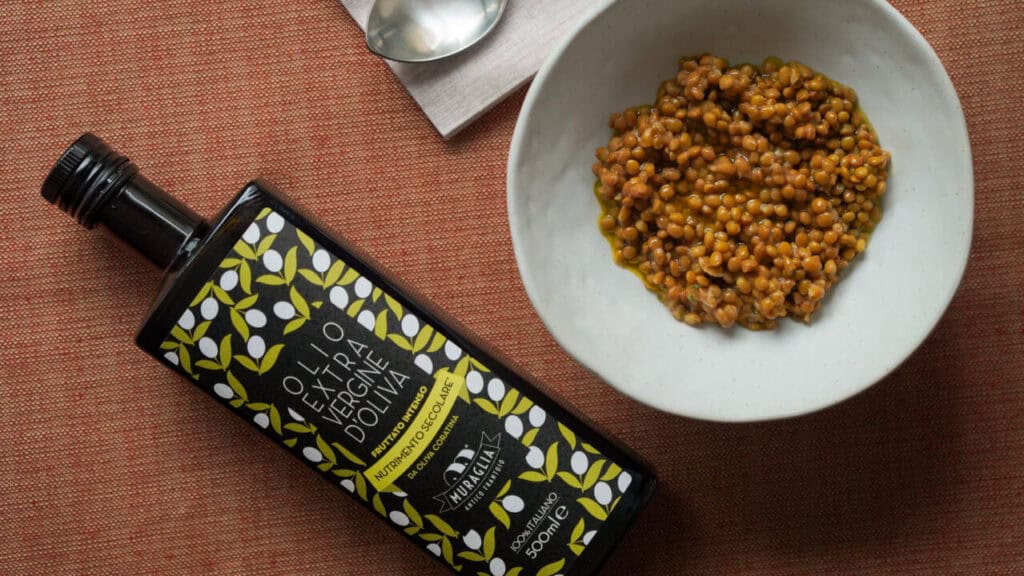
Monocultivar Coratina is the boldest expression of our Puglia. It’s an olive oil that doesn’t ask for permission—it makes a confident entrance. Exceptionally rich in polyphenols (those valuable antioxidants that support heart health), it delivers that signature peppery kick in the throat.
Its aroma is intoxicating, with notes of freshly cut grass, artichoke, and wild fennel. It’s a headstrong oil—just like us.
This intensely fruity oil is ideal for dishes with strong structure and bold flavors. It needs to stand shoulder to shoulder with other ingredients—not to overpower them, but to elevate them.
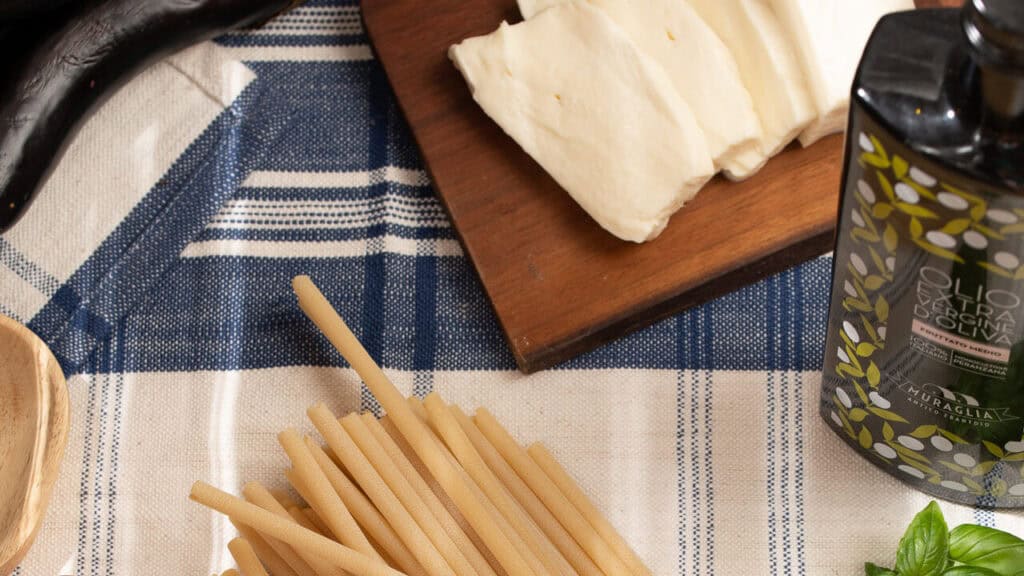
If Coratina is power, monocultivar Peranzana is grace. This medium-fruity oil is balanced, smooth, and rounded. It doesn’t attack the palate—it caresses it. Its aroma is softer, with notes of tomato, arugula, and fresh almond.
Peranzana is the oil of subtlety. It’s what we choose when we want the main ingredient to remain the star, supported by a refined aromatic base.
Choose this oil for delicate dishes, where balance is everything.
Don’t limit yourself. The real secret of great chefs is having a “palette” of oils at their disposal. Try serving both an intense and a medium oil at the table, and have fun discovering how the flavor of something as simple as a slice of bread can change. It’s a tasting exercise that will surprise you.
For us, taste and visual experience are inseparable. Olive oil is precious and deserves to be kept in a vessel that reflects its value.
That’s why our ceramic jars, shaped and hand-painted by master artisans from Puglia, are not just bottles—they’re pieces of design that bring color and joy to your table. Imagine serving dinner and placing one of these jars at the center: you’re offering your guests not just a seasoning, but a piece of our history and artistry.
Because, in the end, eating well is an act of love—for yourself and for others. And love deserves beauty.
Pairing the right olive oil isn’t a rigid rule—it’s a beautiful game of trial and discovery. Start listening to your palate. Notice the bitterness, the spice, the fruitiness. Let your senses guide you.
Next time you cook, pause for a moment before pouring the oil and ask yourself: What does this dish need—strength or gentleness?
The answer is right there, inside that bottle holding the sun of Puglia.